Chapter II
Beyond the Western Front
As the conflict escalated into a global war, Welsh valley soldiers were drawn far beyond France into the blinding heat of the Middle East.
The War Spreads Across the Globe
While the Western Front absorbed the primary weight of Britain's industrial armies, the Great War rapidly exploded into a sprawling multi-continental conflict. For many soldiers originating from the coal-mining valleys of Gwent, military service meant trading the dark and dusty coal mines for entirely foreign, punishing environments— to the blinding heat and waterless deserts of Mesopotamia or the rugged, disease-ridden mountain peaks of the Balkans or the perilous shores of the Dardanelles. [1]
In this second chapter of our "Stories" we explore the 3 major campaigns outside the European theatre of the First World War where the Men of Monmouthshire fought and died. (You may select below to go directly to that campaign.)
In this second chapter of our "Stories" we explore the 3 major campaigns outside the European theatre of the First World War where the Men of Monmouthshire fought and died. (You may select below to go directly to that campaign.)
19 February 1915 - 9 January 1916
Gallipoli Campaign & Helles Front
The Gallipoli Campaign of 1915 remains one of the most devastating chapters of the First World War, and its tragedy was felt deeply in the tight-knit mining communities of the South East Valleys of Wales. At the heart of the British amphibious assault on the peninsula was Cape Helles, where Allied forces attempted to break the Ottoman defenses in a brutal war of attrition.[2]
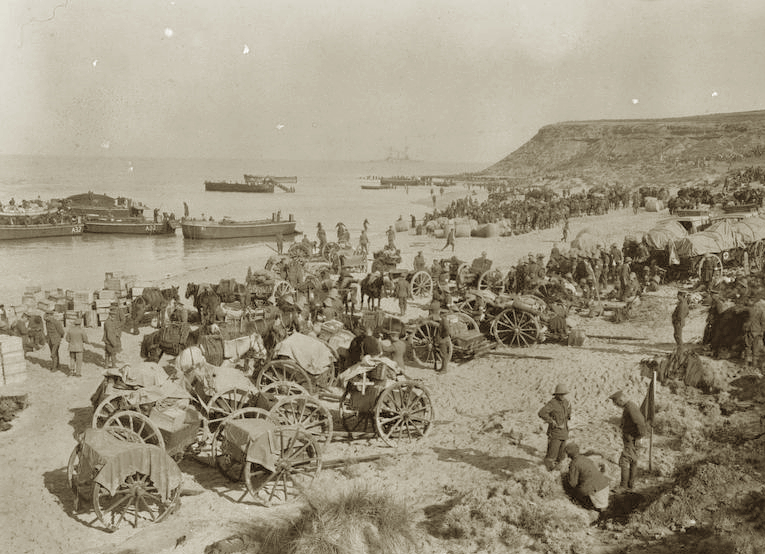
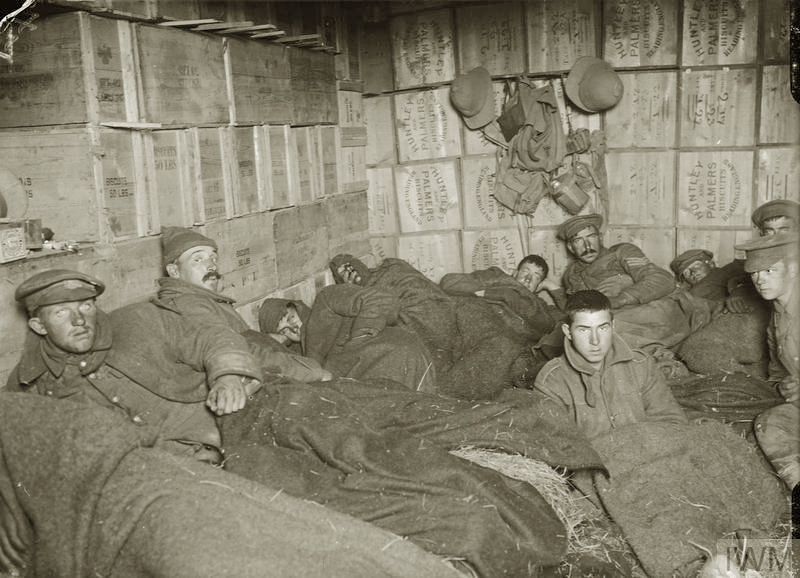
While the territorial battalions of the Monmouthshire Regiment predominantly served on the Western Front, they were structurally linked as part of the Corps of the South Wales Borderers. It was through this overarching regimental identity—and the mobilization of Monmouthshire men across multiple regular and service units—that the South East Valleys left an indelible mark on the cliffs of Helles.
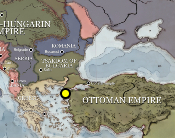
For the men of Oakdale—the transition from the dark, dusty coal faces of Wales to the blinding heat and exposed ridges of Gallipoli must have been jarring. Serving primarily within the 2nd and 4th Battalions of the South Wales Borderers, these soldiers faced relentless machine-gun fire and shrapnel at landing zones like 'S' Beach and the bloody slopes of Krithia. The physical conditions at Helles quickly deteriorated into a living hell. Monotonous rations, an acute lack of fresh water, and a swarm of flies led to rampant dysentery, weakening the soldiers as much as the combat did.
Despite the tactical failures of the Allied high command, the men from the valleys displayed immense resilience. Miners used their civilian excavation skills to dig intricate trench systems under constant bombardment. However, the cost was staggering. The campaign shattered the close-knit fabric of Oakdale, as news of casualties filtered back to Monmouthshire, leaving local families to mourn sons, brothers, and fathers buried thousands of miles away in Turkish soil. Today, the names carved into the Helles Memorial stand as a solemn reminder of the immense sacrifice made by these Welsh valleys men in a campaign defined by courage and catastrophe.[3]
The futile campaign claimed the lives of many brave valley men, including Pte. Edward Watkins of the 4th South Wales Borderers, who sustained fatal wounds and died on a hospital ship on 24 August 1915; Sapper William Arthur Lloyd of the Royal Marines Divisional Engineers, who was killed in action on 30 November 1915, at the Helles Front and Pte. Samuel Fisher, who faced the severe trials of the Mediterranean operations before returning wounded to the UK, where he eventually succumbed to pneumonia on 25 July 1917, at the age of 44.
6 November 1914 – 14 November 1918
Mesopotamian Campaign
The Mesopotamian Campaign of 1915–1918 remains one of the most grueling and environmentally hostile campaigns fought by British Empire forces during the First World War. Tasked originally with securing the Persian oil fields near Basra, the Mesopotamian Expeditionary Force pushed relentlessly up the arid tracks of the Tigris and Euphrates rivers toward Baghdad.[4] Among those thrust into this ancient landscape were industrial workers and coal miners from the South East Valleys of Wales, who traded the subterranean dark of the coal mines for the unforgiving glare of the Middle Eastern sun.
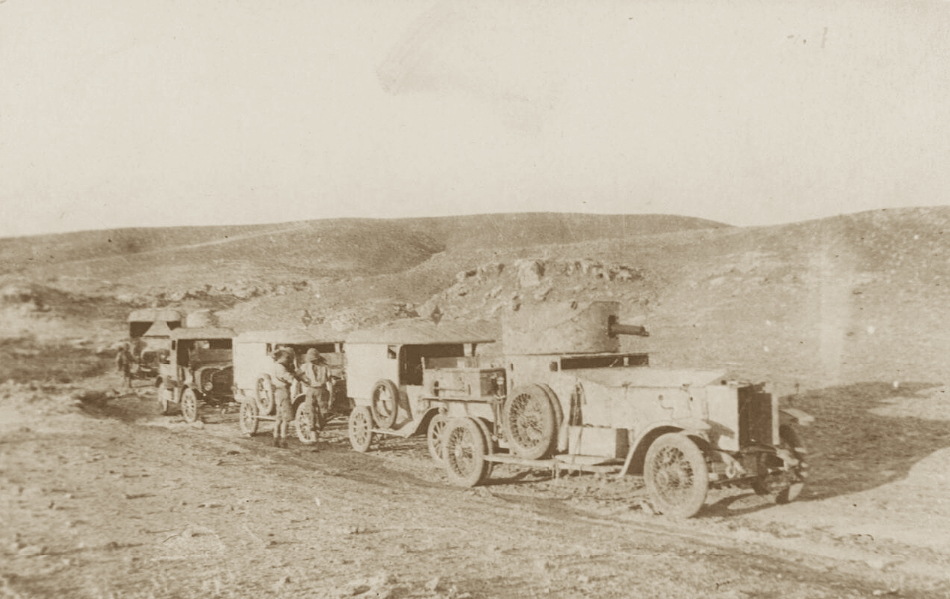
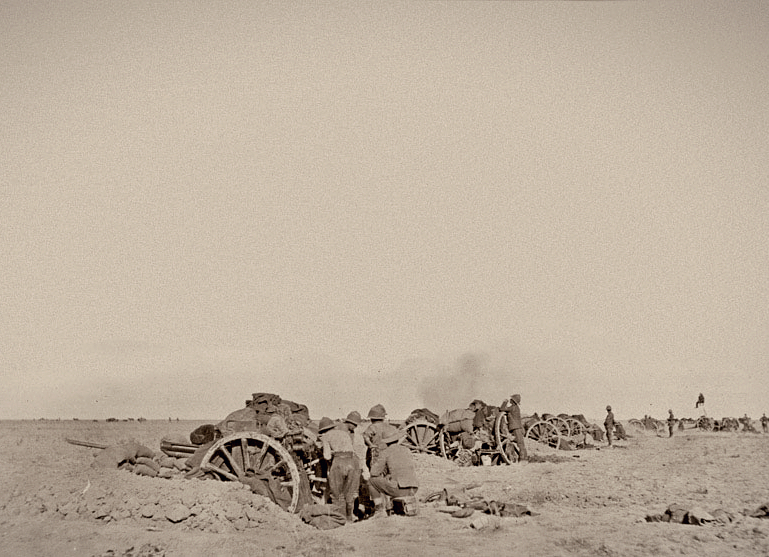
While the localized territorial battalions of the Monmouthshire Regiment predominantly battled on the Western Front, they were structurally organized under the overarching Corps of the South Wales Borderers. Due to this regional administrative mesh, vast numbers of Monmouthshire recruits were channeled directly into the 4th (Service) Battalion of the South Wales Borderers. When the 4th Battalion arrived along the Tigris Corps front in early 1916 to reinforce the desperate, failed relief of the besieged garrison at Kut al-Amara, the men of the valleys formed the backbone of the assault.
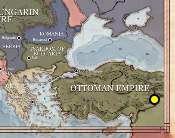
For the colliers of Oakdale—the shifting Mesopotamian climate presented a profound shock to the system. Stationed across sun-baked mud flats and vast river deltas, the soldiers encountered blinding summer temperatures that routinely exceeded 45 degrees Celsius, followed by sudden, biting winter deluges. While the tactical operations against heavily fortified Ottoman trenches were fierce, it was the severe lack of fresh water, combined with rampant outbreaks of sunstroke, dysentery, and malaria, that decimated the ranks far more ruthlessly than enemy fire.
Despite the severe systemic failures of the campaign's early logistics, the mining men of Monmouthshire demonstrated exceptional endurance, utilizing their industrial skillset to entrench positions in the featureless desert landscape. The far-flung campaign shattered the close-knit social fabric of Oakdale as tragic notices from the War Office gradually trickled across the valleys, confirming deaths thousands of miles away. Today, the names permanently carved onto the stone panels of the Basra Memorial stand as a solemn testament to the ultimate sacrifices made by these Welsh industrial workers on a distant, punishing front.[5]
All attempts to break through exacted a terrible toll on the men from South Wales. Acting Corporal Frank Herbert Howard fell during a bloody frontal assault across open ground at Sannaiyat on 9 April 1916. Weeks later, on 22 April Pte. Richard Henry Harvey was likewise killed in action during another desperate assault of Sannaiyat. Sadly, just days after these failed attacks, the starving garrison at Kut was forced to surrender.
1917 - 1918
Palestine Campaign
The Palestine Campaign of 1917–1918 stands as a dramatic, highly mobile war of movement across the ancient desert gates and rocky hills of the Holy Land. Pushing north out of the scorched expanses of the Sinai Peninsula, the Allied Egyptian Expeditionary Force aimed to shatter the deeply entrenched Ottoman frontline running from Gaza to Beersheba.[6] Among those called upon to execute this daunting offensive across the sands were the rugged colliers and laborers from the South East Valleys of Wales, who carried the deep-seated identity of their mining communities directly into the biblical theatres of Gaza and Jerusalem.
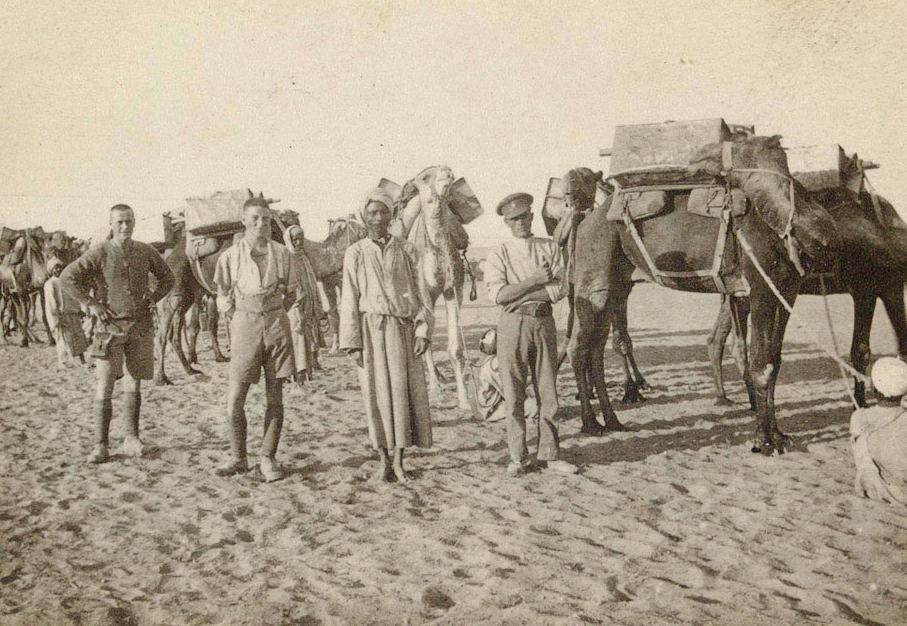
While the primary territorial service battalions of the Monmouthshire Regiment were heavily committed to the static trench warfare of France and Flanders, their overarching administrative parent structure—the Corps of the South Wales Borderers—maintained an active footprint in the East. Furthermore, many Monmouthshire men from the valleys were recruited directly into the regional dismounted cavalry units, notably the Pembroke and Glamorgan Yeomanry. In early 1917, these yeomanry units merged to form the formidable 24th (Service) Battalion of the Welsh Regiment, which, alongside the service battalions of the South Wales Borderers, fought side-by-side through the grueling desert pushes.
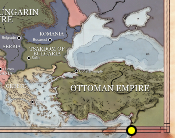
The arid topography of Palestine provided a jarring and brutal environment for most men of the Valleys. Swapping the cool dampness of the underground coal face for blinding desert sandstorms, severe water rationing, and a blazing sun, the soldiers faced exceptional hardships. Whether enduring the intense defensive battles at Gaza or navigating the steep, treacherous limestone ravines of the Judean Hills, these Welsh troops had to rely on sheer physical stamina to withstand the environmental strains and rampant outbreaks of malaria that constantly depleted their ranks.
Despite the tactical complexities of fighting across vast open sands and heavily fortified ridge lines, the men from the valleys demonstrated a profound grit, utilizing their industrial skills to secure transport routes and establish defensive perimeters. The sweeping eastern campaign left an enduring mark on the social fabric of Oakdale, as devastating telegrams slowly made their way back to Monmouthshire to confirm the loss of loved ones. Today, the names permanently recorded on the panels of the Jerusalem Memorial stand as a solemn and lasting tribute to the immense sacrifices made by these Welsh industrial workers on a distant, historic front.[7]
Heavy fighting through the desert and rocky hills claimed valuable local lives across the Eastern theater. 24-year-old Gunner David John Evans, who served in the heavy artillery during these grueling coastal advances — died of wounds shortly after Jerusalem fell.
1914 - 1918
A Worldwide Sacrifice: War at Sea
The tactical reality of fighting across the Middle East, the Balkans, and the Dardanelles stood in stark contrast to the static trench warfare of the Western Front. Yet, beyond even these distant shores, the conflict raged across the oceans. The war at sea was an unforgiving theater defined by vast distances, relentless patrols, and the constant threat of unseen attacks and rampant disease.
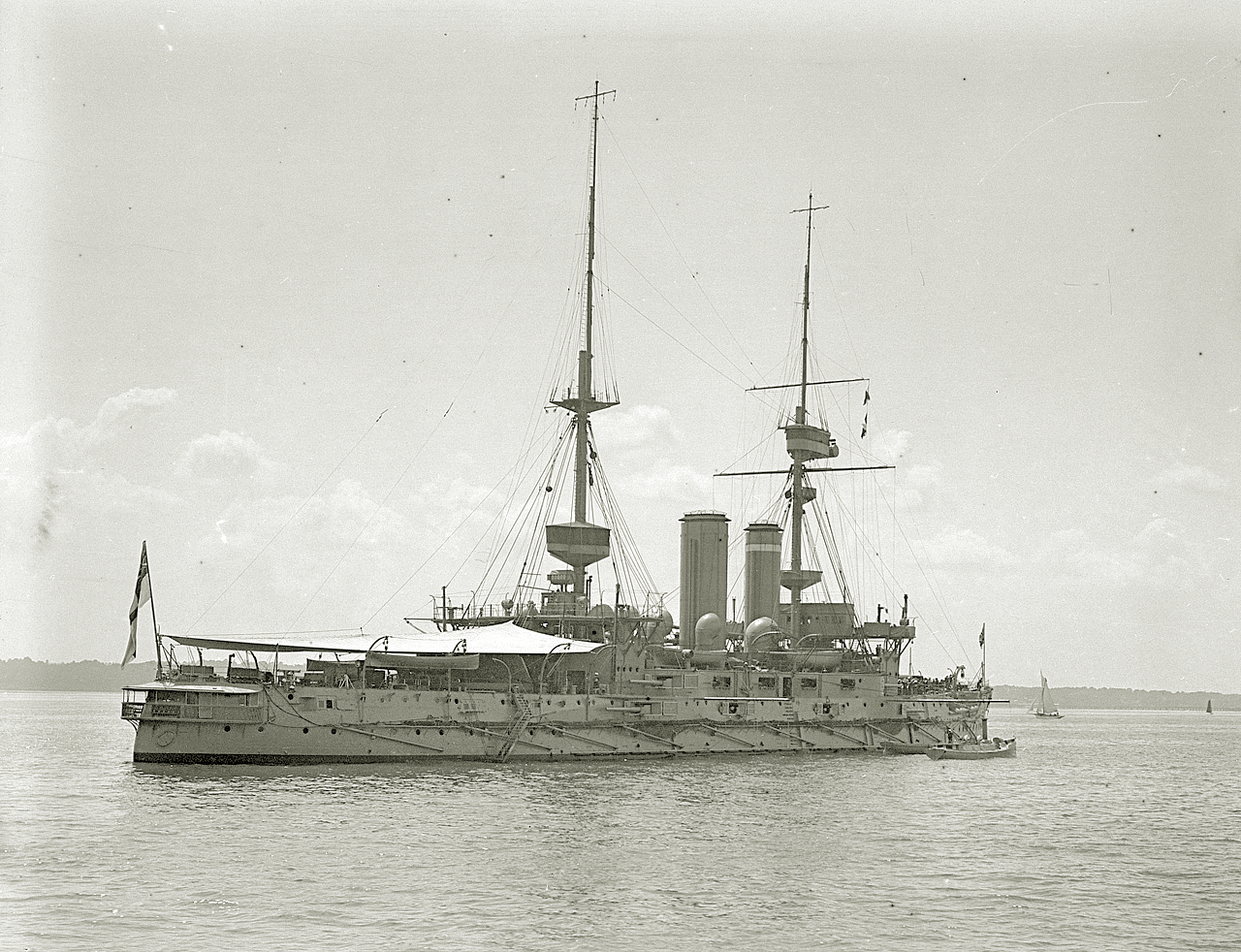
For some young men of the valleys, the ocean offered an entirely different life than the dark dust of the colliery. Ivor James Nelmes, adopted son of John and Elizabeth Higgs of Tredegar, chose this path, joining the Royal Navy as a boy seaman in August 1913. Serving continuously from September 1914 through July 1917, he witnessed the global scale of the naval conflict aboard strategic warships, including the light cruisers HMS Minerva, HMS Dublin, and the battleship HMS Implacable.
The cramped, damp conditions below deck proved just as deadly as enemy artillery. In August 1917, Able Seaman Ivor James Nelmes was invalided out of active service suffering from advanced tuberculosis. Having returned home to Monmouthshire to recuperate, he ultimately succumbed to the illness at the end of 1918 at the age of 20. His loss serves as a poignant reminder that the cost of this worldwide sacrifice touched every corner of the globe, and every branch of service.
Chapter II Notes
- [1] Imperial War Museum (IWM): Global Campaigns and Theatres of the First World War.⮥
- [2] National Army Musuem: The Gallipoli Campaign.⮥
- [3] CWGC Casualty Record: Helles Memorial and Peninsula Operational Logs.⮥
- [4] Imperial War Museum (IWM): The Mesopotamian Campaign Historical Overview.⮥
- [5] CWGC Casualty Record: Basra Memorial and Tigris Corps Engagements.⮥
- [6] Commonwealth War Graves Commission (CWGC): The Palestine Campaign Archive.⮥
- [7] CWGC Casualty Record: Jerusalem Memorial and Judean Hills Operations.⮥